
- 注册
- 登录
- 小程序
- APP
- 档案号
MVRDV · 2025-03-25 08:36:48
© Ossip van Duivenbode
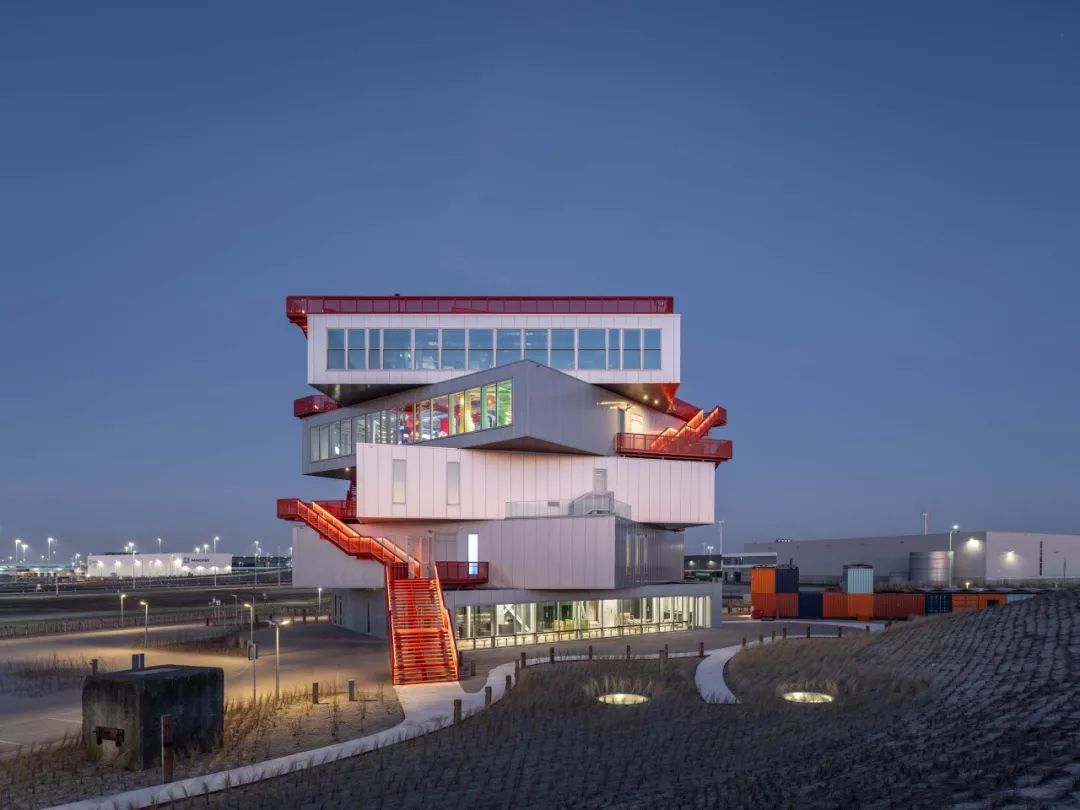
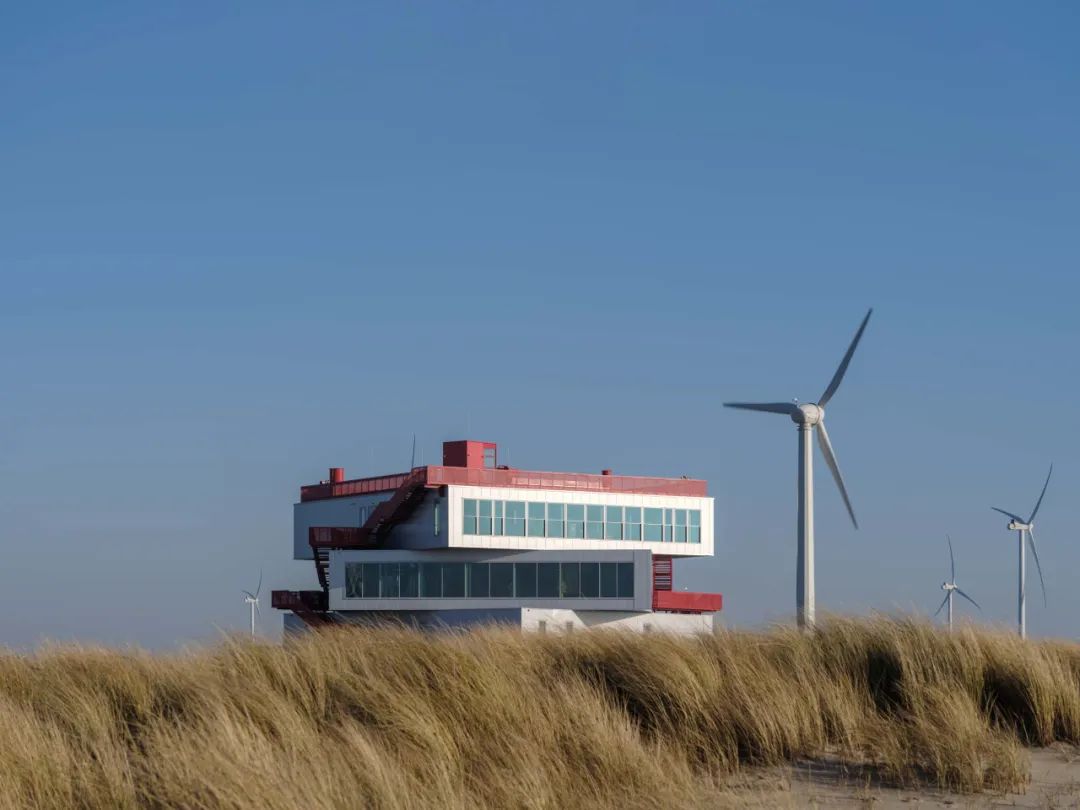
几个世纪以来,鹿特丹一直和它的港口保持着共生关系。进入 21 世纪,港口逐渐迈向可持续和低能耗的重要转型。如何让公众体验到这种变革、感受港口空间的复杂性呢? 由 MVRDV 设计的鹿特丹港游客和展览中心——「波特兰蒂斯」(Portlantis) 已于本周开放 , 建筑坐落于港口最西端,从海岸的沙丘中拔地而出,由五个旋转角度的展览“盒子”堆叠而成,醒目的深红色外挂阶梯从沙地向上蜿蜒至屋顶,人们拾级而上,可在途中收获不同的视角,饱览北海、海岸线和港口的壮丽景色。
For centuries, the city of Rotterdam and its port have grown together in a symbiotic relationship. In the 21st century, the Port is embarking on one of the most significant changes in its history, as it transitions to sustainable, low-energy operations. How can this change be experienced by the public, making sense of the complexity of the port? Opening today, the MVRDV-designed Portlantis is a visitor and exhibition centre for the Port of Rotterdam located at the port’s western-most point. Comprising a stack of five rotated exhibition spaces, the building stands out from its surroundings with its crimson-red public route from the dunes to its rooftop, while offering spectacular views in all directions of the North Sea, the coastline, and the port.
© Ossip van Duivenbode
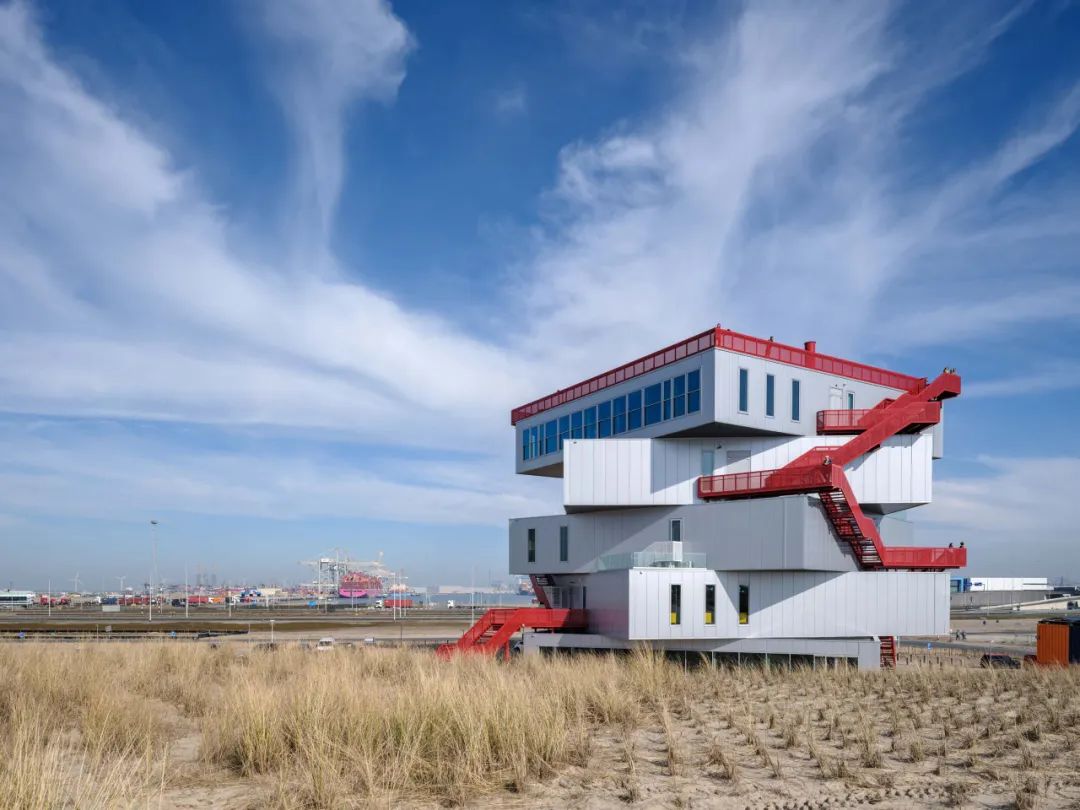
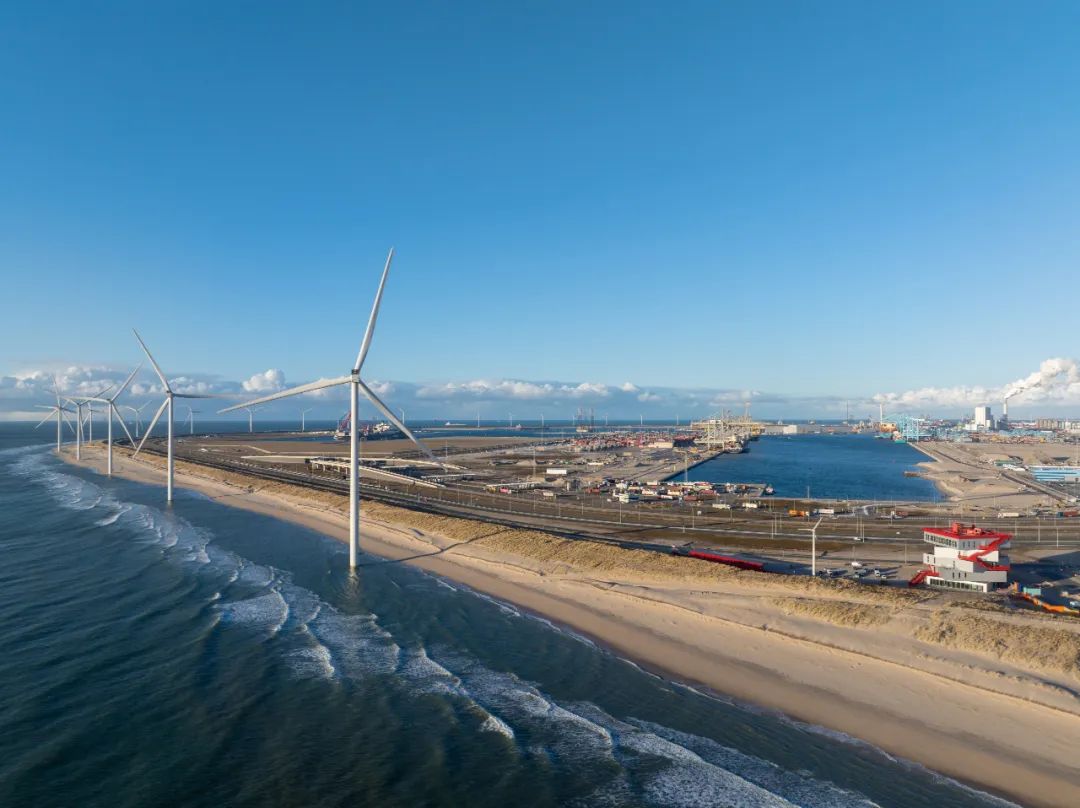
「波特兰蒂斯」游客中心位于鹿特丹港 Maasvlakte 2 人工填海区的开阔海滩上,位置显著,从远处就可一览无余,有如一座灯塔。 它以实用、严谨的方式呈现展示教育的内容;通过简单的功能、地标式的外观和工业材料传达出港口精神。
Occupying a prominent location on the beach of the port’s Maasvlakte 2 artificial land extension, Portlantis creates a beacon that is visible from afar. It takes a practical, no-nonsense approach to its educational task, channelling the spirit of the port with its simple functionality, dramatic presence, and industrial materials.
© Ossip van Duivenbode
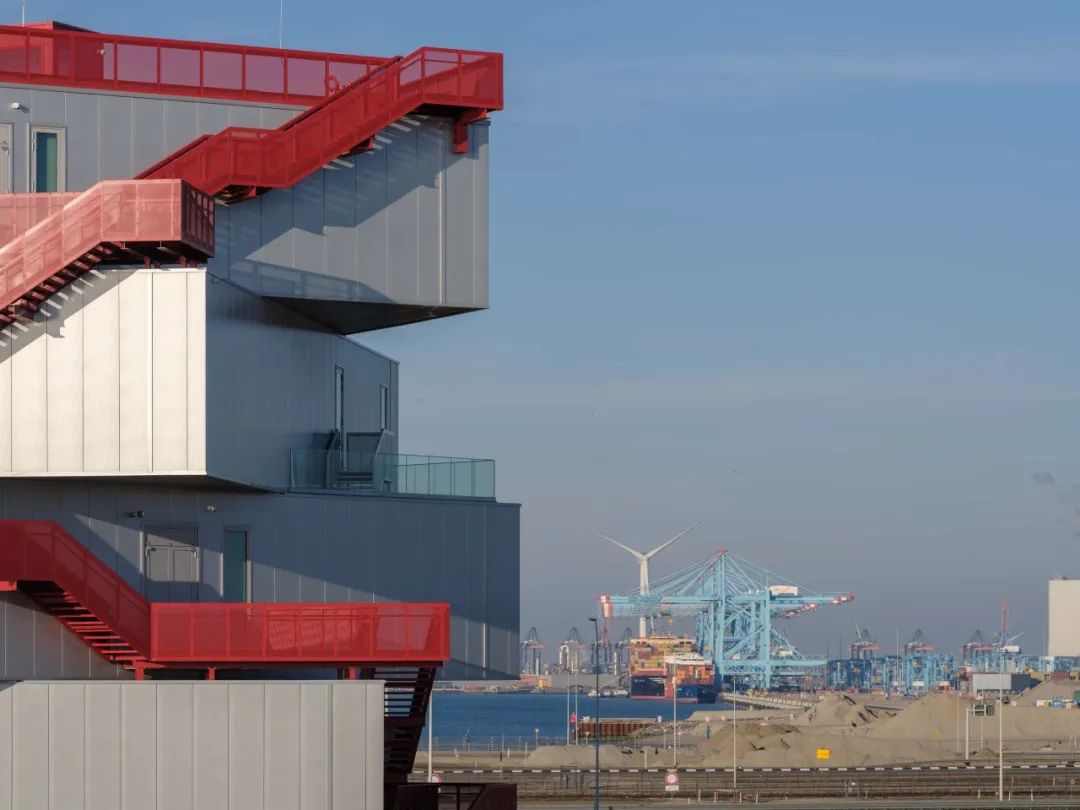
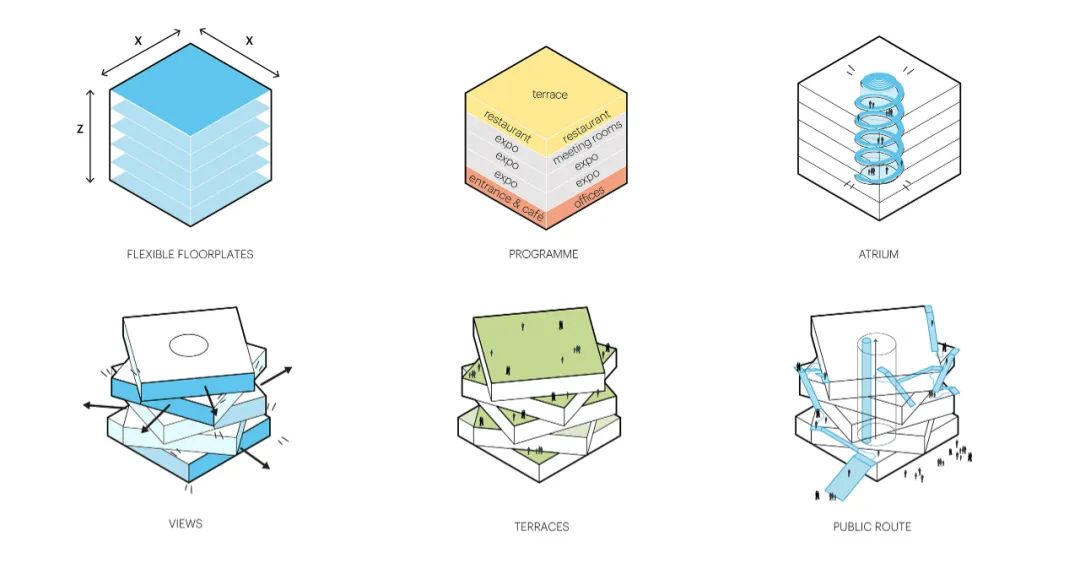
建筑的形态直接定义了空间内外的活动方式 ——每层楼的平面都呈方形,同时设置了一面大型开窗,以框景的形式捕捉周围的海岸风光。每层楼的旋转方向和开窗朝向都与其功能相对应:一层是咖啡厅,开窗朝西,人们可以在一层近距离欣赏沙丘,而四楼餐厅的食客则可以观赏到北海的日落和夜晚灯火通明的港口天际线。
The shape of the building is a direct response to the activities taking place inside and out: each floor is square in plan and has a large panorama window that frames a different view of the surroundings. The orientation of each floor, and the direction its main window faces, corresponds to its function: on the ground floor café, this window faces westward and provides an intimate view of the dunes, while diners in the fourth-floor restaurant can enjoy views of both sunsets over the North Sea and the illuminated skyline of the port at night.
© MVRDV
概念解析
diagrams
© Ossip van Duivenbode
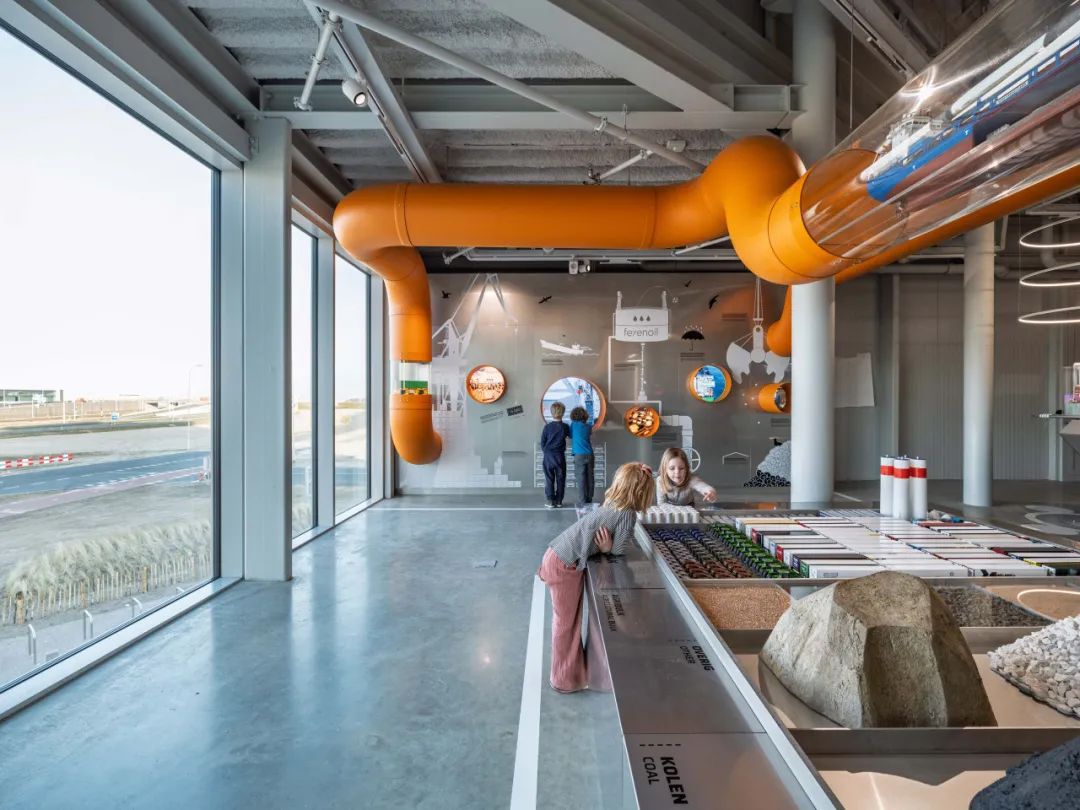
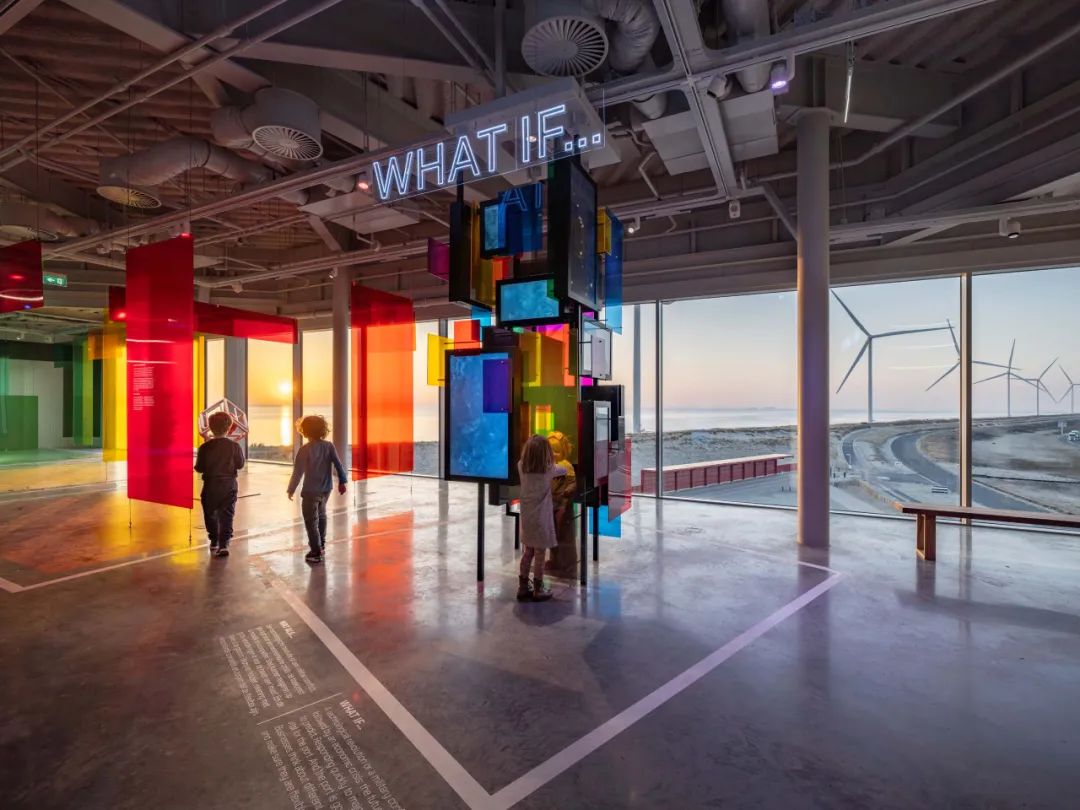
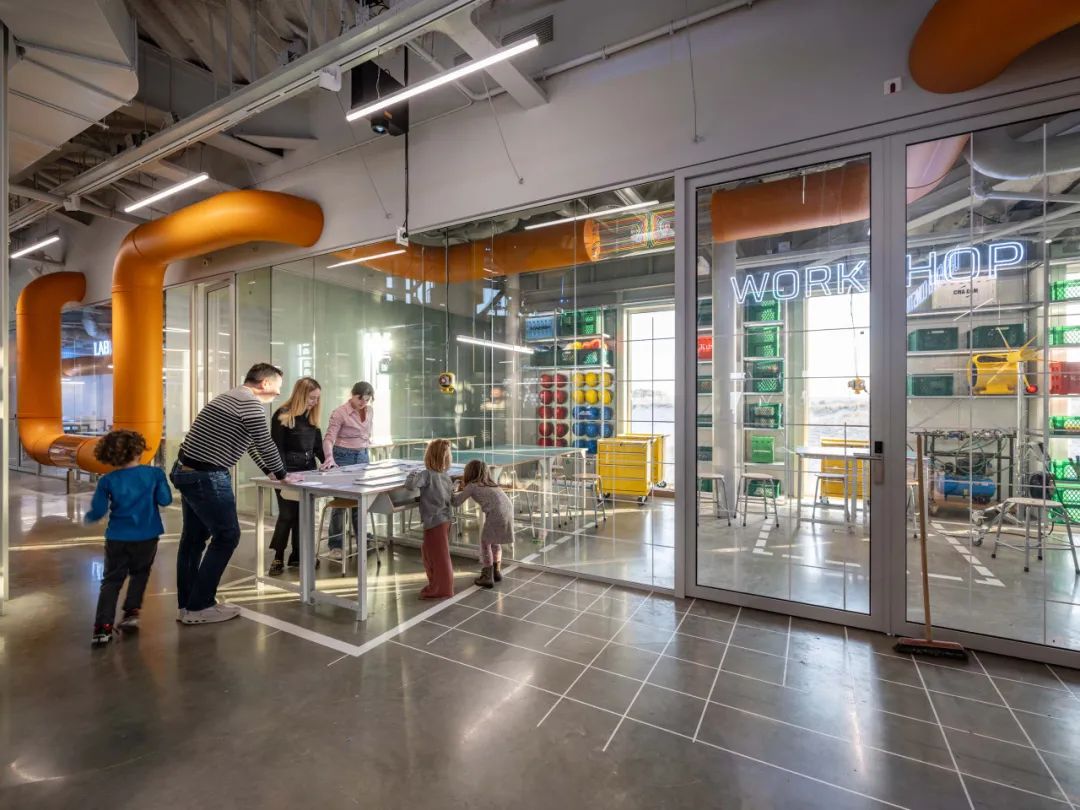
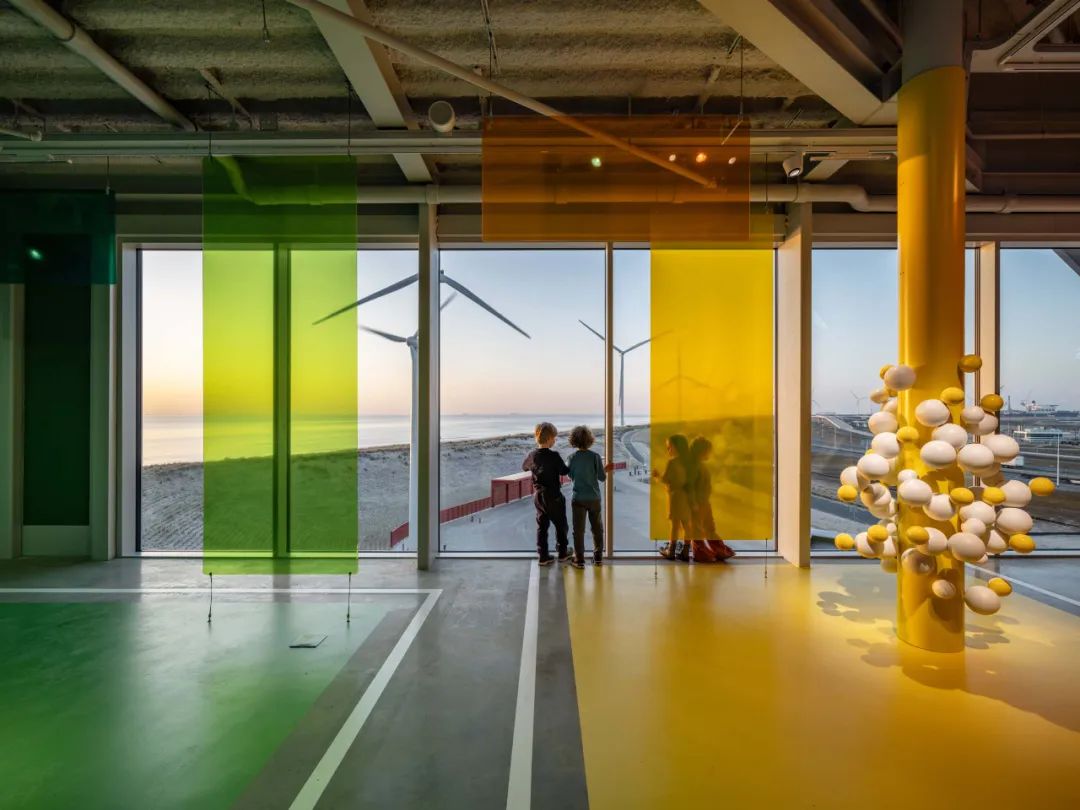
由荷兰 Kossmanndejong 工作室为「波特兰蒂斯」策划的常设展览分布在中间三层楼。每一层的展陈都涉及不同的主题,全景窗都聚焦在港口内的元素,增强了展览的内容。
The permanent exhibition, designed by Kossmanndejong, is spread over the three levels in between as objects in this industrial environment. In the exhibition, each level addresses a different theme, and the panorama windows are focused on elements within the port that enhance the content of the exhibition.
© Ossip van Duivenbode
© Ossip van Duivenbode
© Ossip van Duivenbode
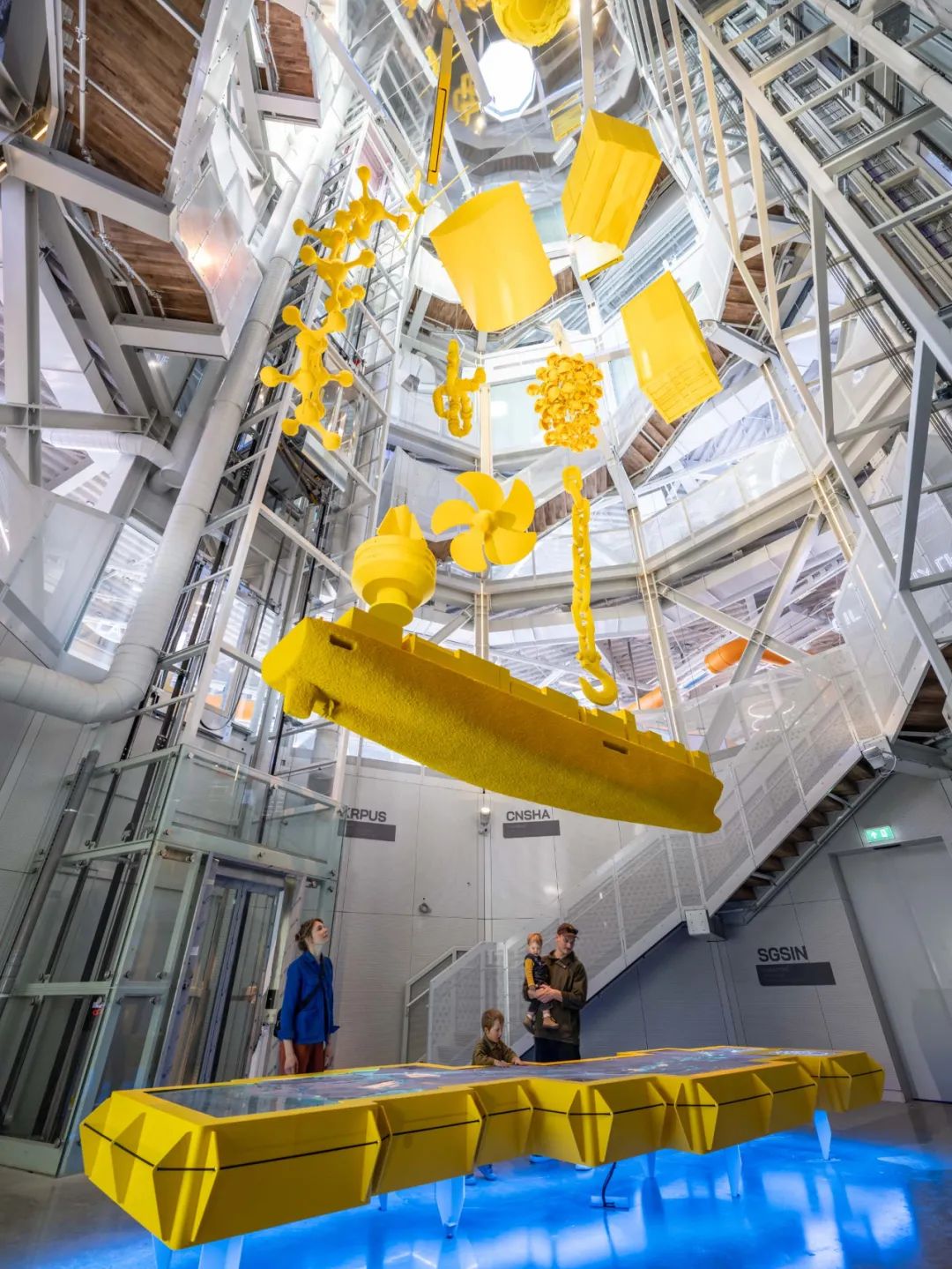
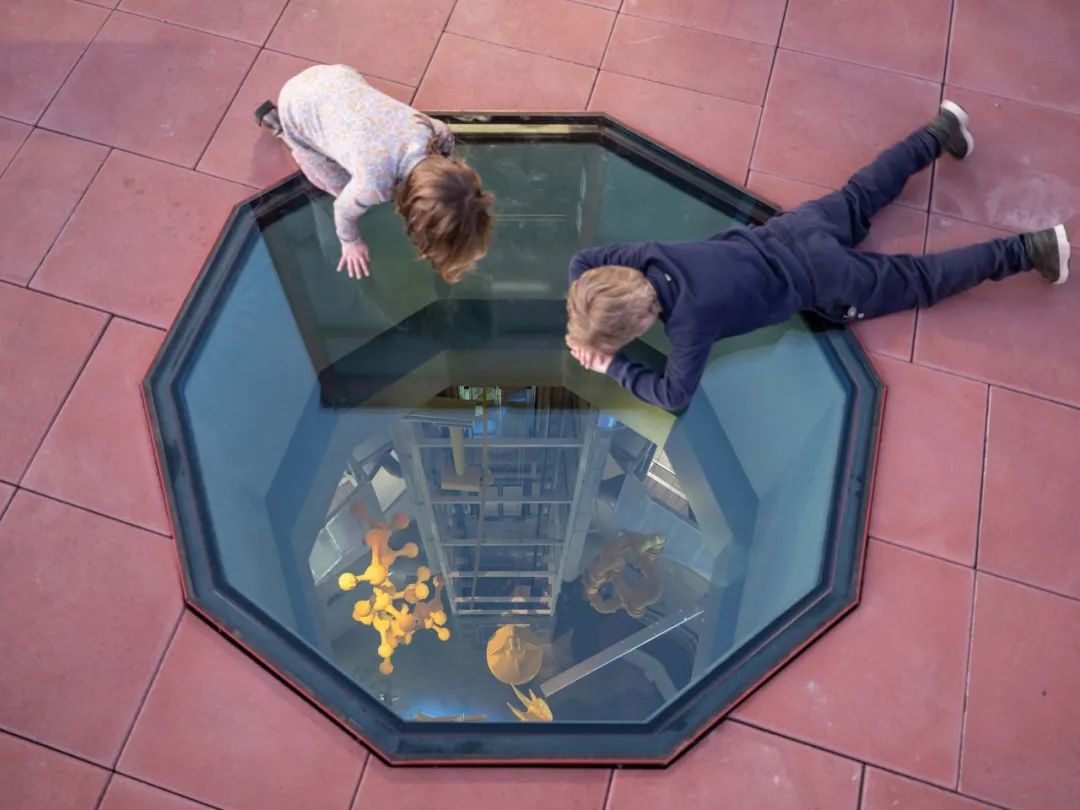
建筑内部包含一个 22 米高的中庭,本身就是一个展览空间,中庭内悬挂着一个动态雕塑。雕塑下方是放置在一层的鹿特丹港模型。中庭顶部采用镜面天花板,视觉上增加了一倍的高度,强化了空间的戏剧性。一楼的入口设置了旋转门,将展览装置隐藏起来,当游客进入大楼内部中心时,展览直入眼帘,增强了体验感。
At the centre of the building is a 22-metre-tall atrium that functions as an exhibition space in its own right. A kinetic sculpture hangs in its centre, with a model of the Port of Rotterdam greeting visitors on the ground floor. This dramatic space is emphasised by the mirrored ceiling, which doubles its apparent height, and by the entrance from the ground floor, in which a rotating door conceals the exhibition until visitors enter the voluminous heart of the building.
© Ossip van Duivenbode
© Ossip van Duivenbode
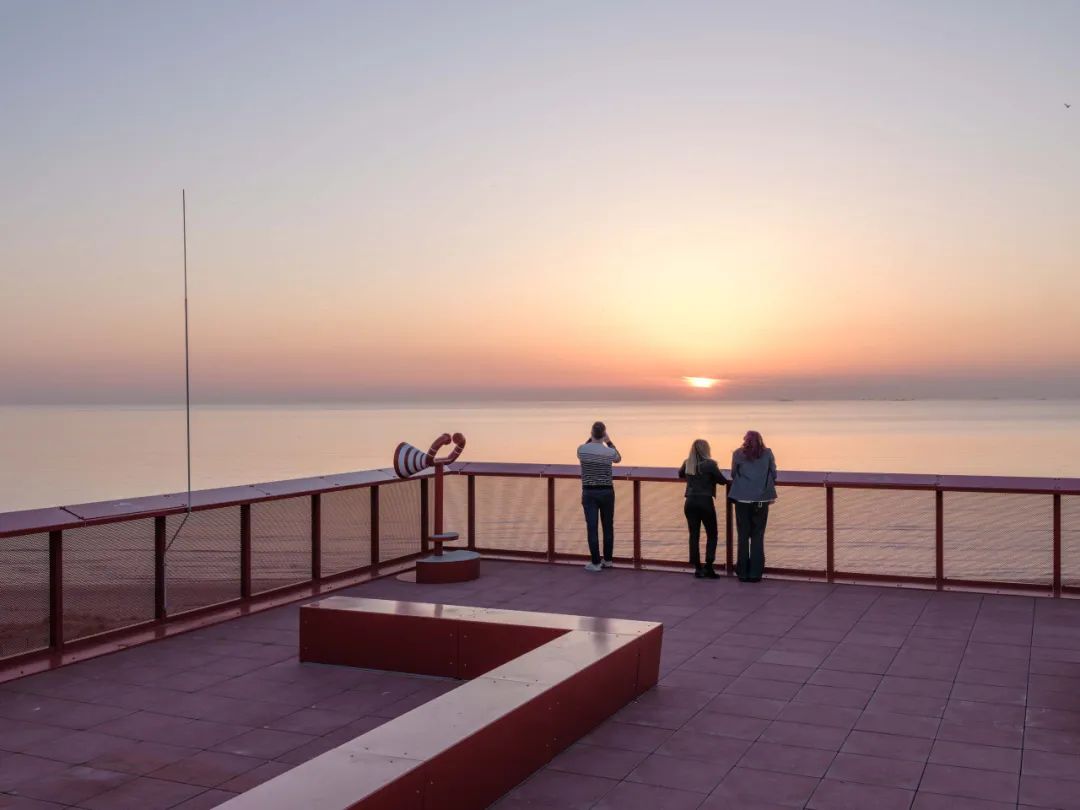
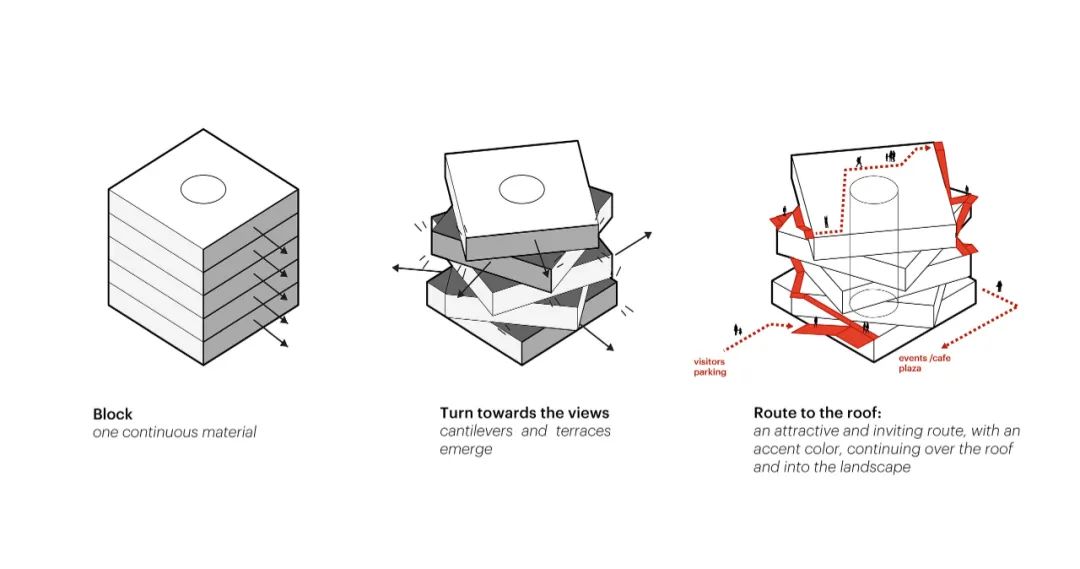
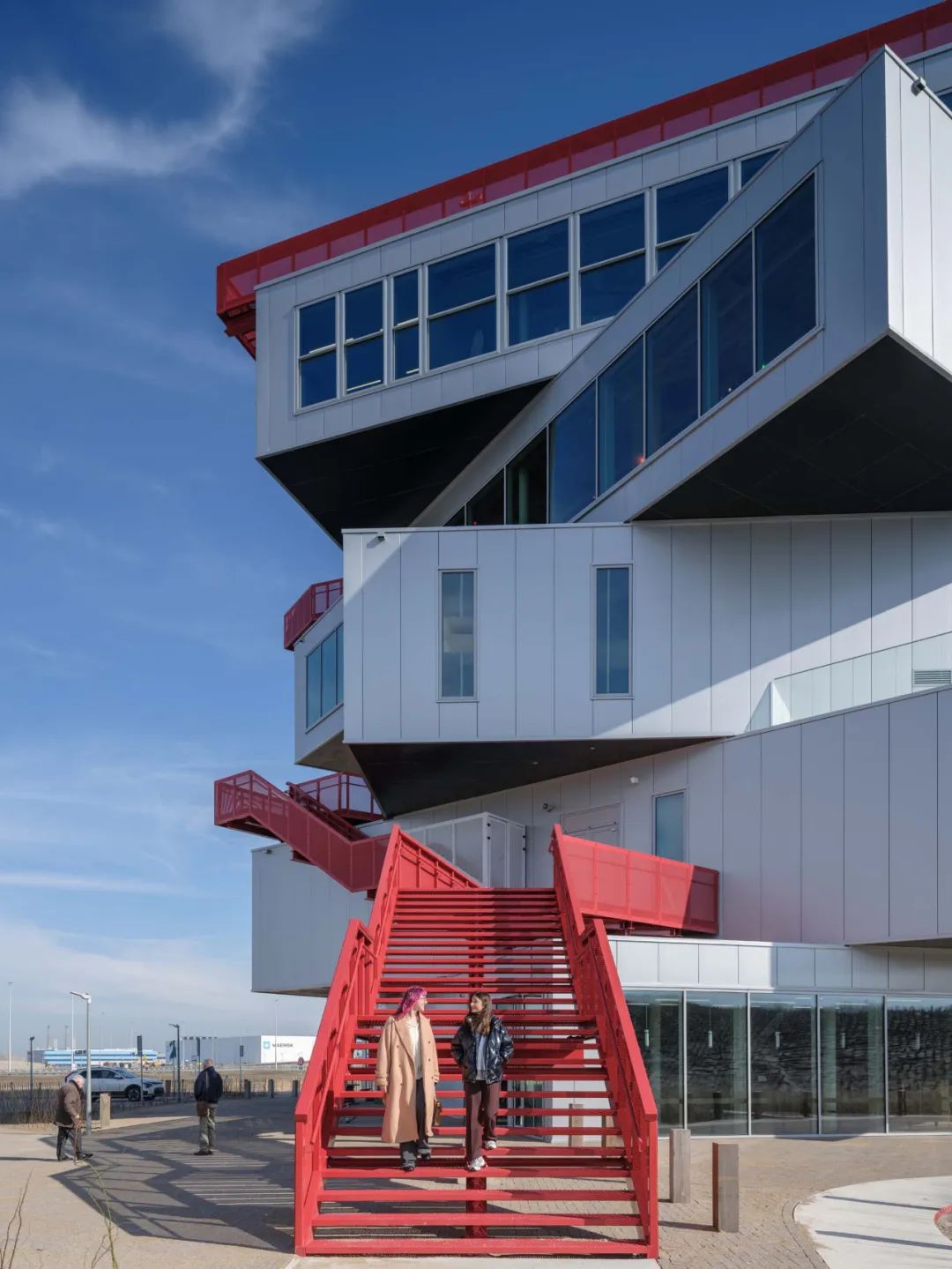
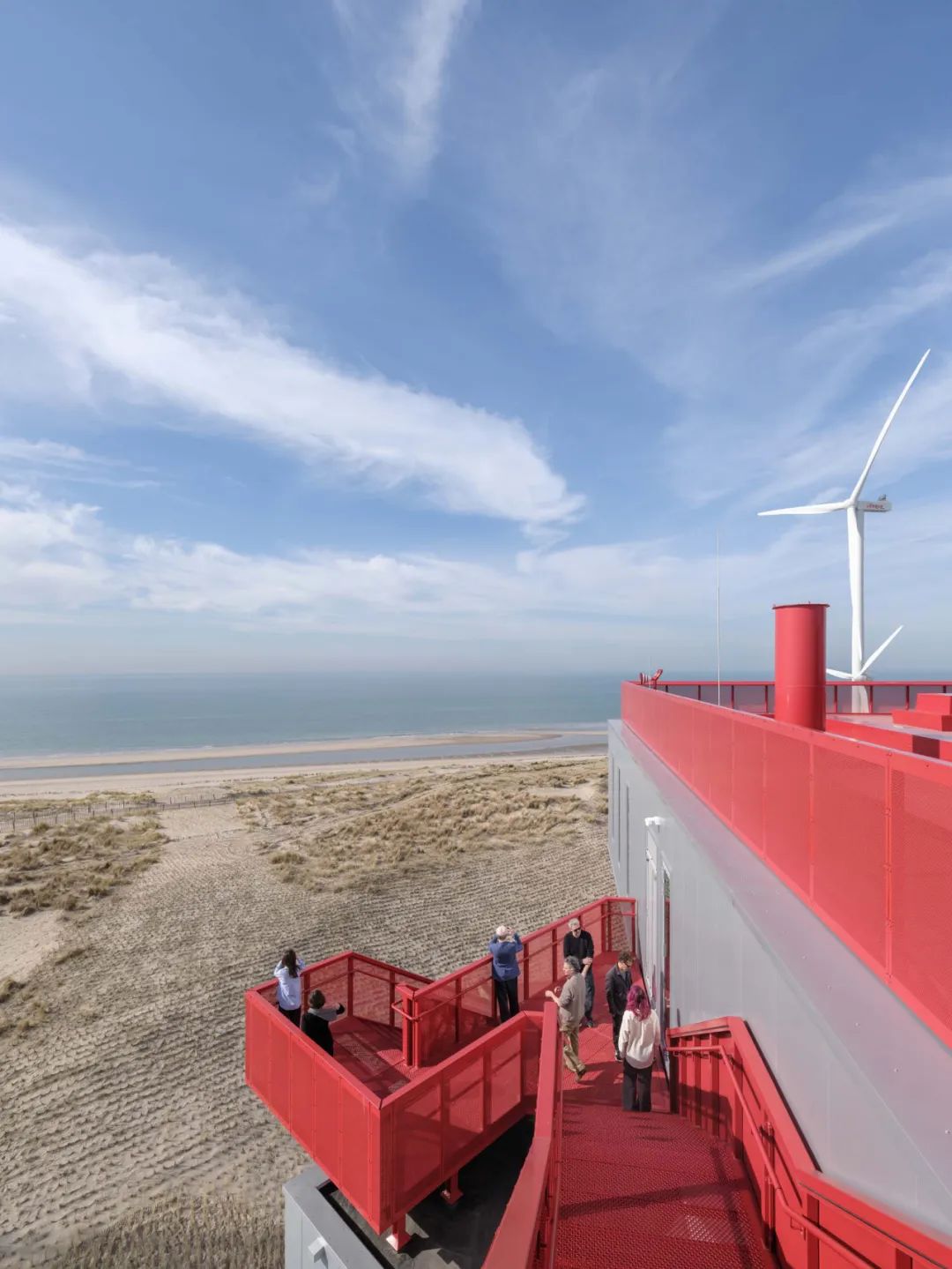
红色阶梯以曲折蜿蜒的形式“悬挂”在建筑外部,在每层楼形成不同朝向的平台。 阶梯以醒目的颜色和姿态为建筑赋予强烈的地标属性,同时强调了通往屋顶的动线。阶梯面向公众免费开放,让建筑本身成为鹿特丹港一座独特的观景塔。
On the outside of the building, the different orientations of each level create platforms on each level. These are connected by bright red staircases that twist their way up the stack, highlighting the route to the roof. This route is accessible to the public for free, allowing the building to act as a viewing tower over the port.
© MVRDV
概念解析
diagrams
© Ossip van Duivenbode
© Ossip van Duivenbode
“ 「波特兰蒂斯」是一座引人注目的灯塔,也是一座瞭望塔 ”,MVRDV 创始合伙人 Winy Maas 说道,“对住在鹿特丹的人来说,他们并不了解这座港口,也不知道这里都在发生些什么。而「波特兰蒂斯」为人们提供了一个探索的窗口,让他们了解港口的变化、这些变化与城市的关系以及对城市生活带来的影响。 这座建筑就像一台会讲故事的机器,通过集中高效的形式完成了叙事和展示的任务。 ”
“Portlantis is a beacon, it’s eye-catching, but it’s also a kind of watchtower”, says MVRDV founding partner Winy Maas. “When you live in Rotterdam, the port sits on the horizon – it’s ‘over there’ and many people don’t really know what goes on there. Portlantis gives people a way to investigate, to see how things are changing in the port, how that relates to the city, and how it affects the life they live in the city. It does this extremely efficiently – like a machine for storytelling.”
© Ossip van Duivenbode
© Ossip van Duivenbode
建筑采用简单的工业材料,遵循循环经济的原则和可持续的设计方法。 建筑结构可拆卸,构筑部件可以回收再利用。同时已与制造商协议,在建筑到达使用寿命时,可将外墙面板拆除回收。建筑的地基也避免了使用混凝土桩,降低对基地的影响。除了建筑本身使用了可持续的材料和建造方法, 其运营也超越了能源中性的标准 。采用高效的隔热材料和热泵系统,降低了建筑能耗。同时,得益于专用的风车发电,「波特兰蒂斯」游客与展览中心制造的能源比其消耗的多出 30%。
The building’s materials are simple and industrial, seeking to be sustainable by following circular economy principles. The structure is demountable so that its parts can easily be reused, and the façade panels will be returned at the end of their lifespan under an agreement made with the manufacturer. Even the building’s foundation, which avoids the use of concrete piles, is designed to leave no trace. In addition to the sustainable materials of Portlantis, it is also a better than energy-neutral in operation. Efficient insulation and a heat pump mean that the building’s energy requirements are relatively low. Thanks in large part to a dedicated on-site windmill, the project locally generates 30 percent more energy than it uses.
© Ossip van Duivenbode
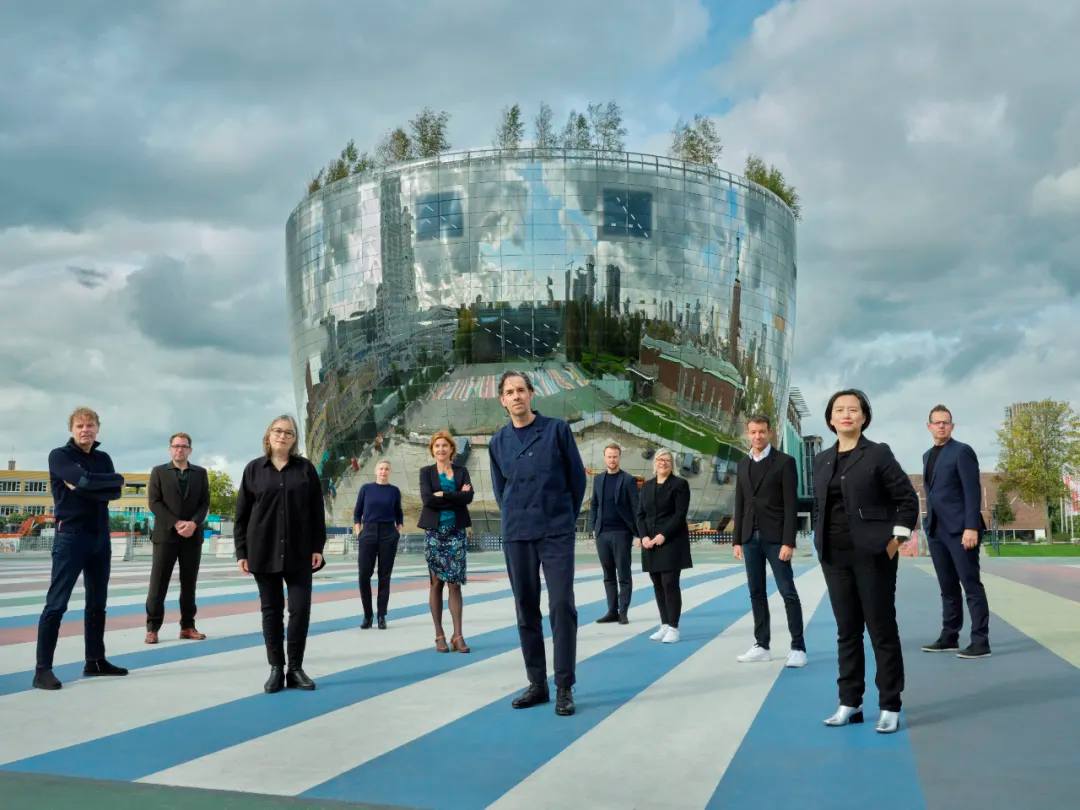
MVRDV建筑规划事务所由Winy Maas、Jacob van Rijs和Nathalie de Vries创立于荷兰鹿特丹,致力于为当代的建筑和都市问题提供解决方案。MVRDV的创作基于深度研究与高度协作,各领域的专家、客户及利益相关方从项目初期一直参与设计的全过程。直率而真诚的建筑、都市规划、研究和装置作品堪称典范,让城市和景观朝向更美好的未来发展。
MVRDV的早期项目,如荷兰公共广播公司VPRO的总部,以及荷兰阿姆斯特丹的WoZoCo老年公寓,都获得了广泛的国际赞誉。MVRDV250余位建筑师、设计师和城市规划师在多学科交叉的设计过程中,始终坚持严格的技术标准和创新性研究。MVRDV采用BIM技术,公司内拥有正式的BREEAM和LEED顾问。MVRDV与荷兰代尔夫特理工大学合作运营独立智库和研究机构The Why Factory,通过展望未来都市,为建筑及都市主义提供发展议程。
MVRDV was set up in 1993 in Rotterdam, The Netherlands by Winy Maas, Jacob van Rijs and Nathalie de Vries. MVRDV engages globally in providing solutions to contemporary architectural and urban issues. A research-based and highly collaborative design method engages experts from all fields, clients and stakeholders in the creative process. The results are exemplary and outspoken buildings, urban plans, studies and objects, which enable our cities and landscapes to develop towards a better future.
Early projects by the office, such as the headquarters for the Dutch Public Broadcaster VPRO and WoZoCo housing for the elderly in Amsterdam lead to international acclaim. 250 architects, designers and other staff develop projects in a multi-disciplinary, collaborative design process which involves rigorous technical and creative investigation. MVRDV works with BIM and has official in-house BREEAM and LEED assessors. Together with Delft University of Technology, MVRDV runs The Why Factory, an independent think tank and research institute providing an agenda for architecture and urbanism by envisioning the city of the future.
特别声明
本文为自媒体、作者等档案号在建筑档案上传并发布,仅代表作者观点,不代表建筑档案的观点或立场,建筑档案仅提供信息发布平台。
29
好文章需要你的鼓励
 参与评论
参与评论
请回复有价值的信息,无意义的评论将很快被删除,账号将被禁止发言。
评论区
MVRDV
关注 发表 272 篇文章Jacob van Rijs ,清华大学,建筑学院,发表演讲
发表272篇文章
发表272篇文章
MVRDV 创始合伙人 Jacob van Rijs 将于3月19日在清华大学建筑学院发表演讲
2026-03-17 18:35:07
“方舟”启航 | MVRDV 设计的欧盟 TUMO 工程与应用科学融合大楼正式动工
2026-03-04 21:10:58
MVRDV 合伙人史文倩女士担任 CTBUH 世界高层建筑与都市人居学会2026 首届中国奖评审
2026-02-04 20:54:51
璀璨“明珠”点亮迪拜天际线:MVRDV 揭晓「光核 Inaura」 大楼中标设计方案
2026-01-24 21:00:36
璀璨“明珠”点亮迪拜天际线:MVRDV 揭晓「光核 Inaura」大楼中标设计方案
2026-01-20 12:14:36
长秋月观景台 | MVRDV在成都蒲江打造与山地自然交融的木构观景建筑
2025-12-11 22:01:05
新加坡「隽峰」住宅完工,MVRDV 的像素化立面设计为高端预制建造塔楼赋予独特的藤蔓意象
2025-12-01 17:02:11
The Grand Ballroom | MVRDV 球形方案赢得地拉那体育综合体建筑设计竞赛
2025-11-13 09:03:26
「萨克斯」高层住宅破土动工,MVRDV 为鹿特丹城市天际线再添新地标
2025-11-10 14:04:54
MVRDV 研发的 CarbonSpace 工具开放公测:辅助设计全过程降低碳排放
2025-10-14 18:57:38